Bitcoin has been one of the most talked-about investment assets of the past decade. Its evolution from a marginal technological experiment into a global asset class has been remarkable. In 2026, the discussion is no longer about Bitcoin’s place in the investment landscape, but rather how significant its role may become and what kind of return potential it can offer in the future.

The crypto market has developed significantly over the years: competition has increased, regulation has tightened, and institutional interest has grown. At the same time, Bitcoin has established its position as part of an increasing number of investment portfolios. This text examines Bitcoin’s current state, its investment potential, as well as the key risks and strategies associated with it.
The current state of Bitcoin
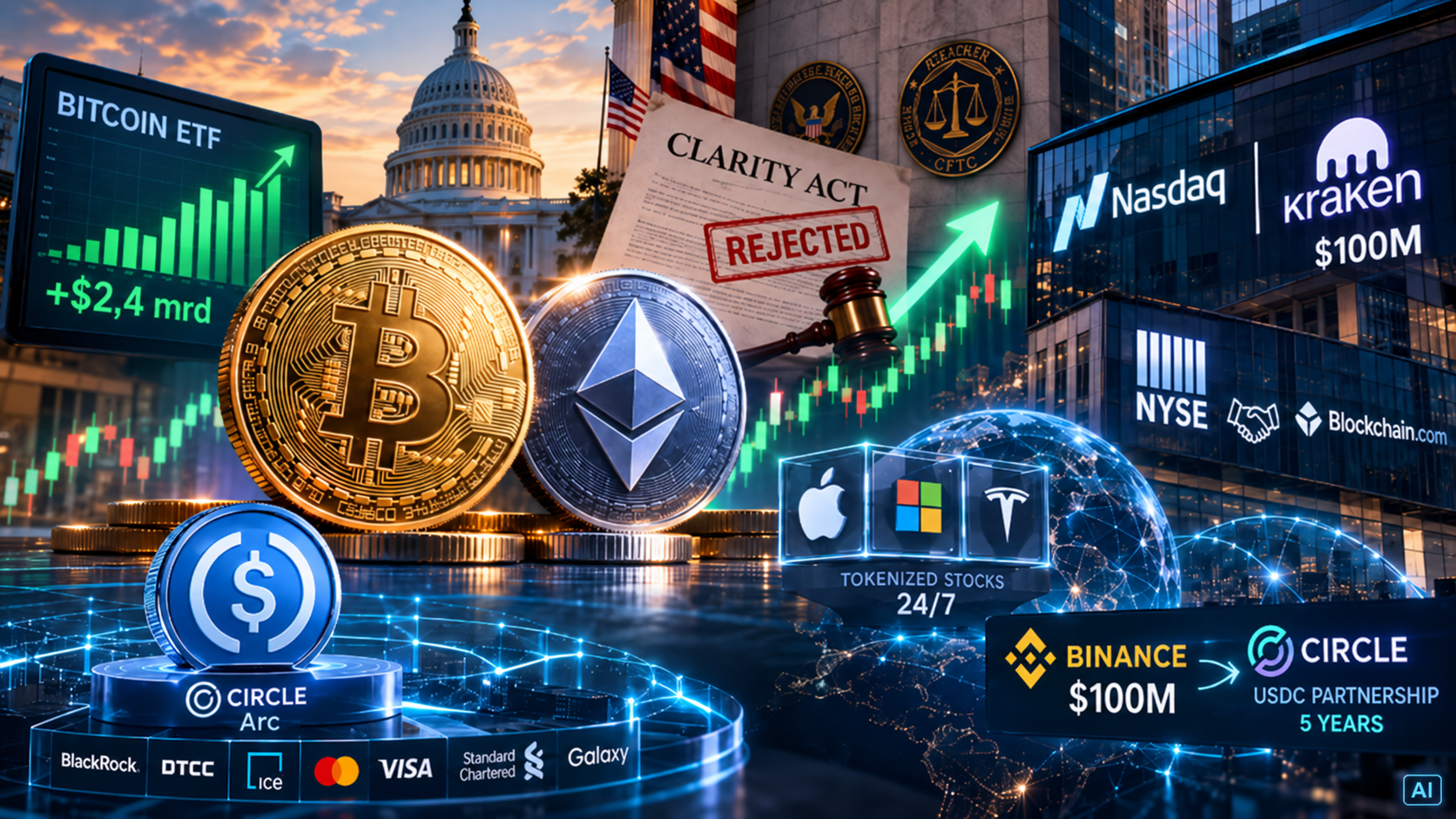
In 2026, Bitcoin has entered a new phase of development. It is no longer merely a speculative asset, but increasingly a part of institutional investment portfolios. Bitcoin ETFs, large investment funds, and even certain state actors have contributed to increasing the market’s stability and legitimacy. For example, the involvement of major asset managers such as BlackRock in the Bitcoin market has brought in significant new capital and increased confidence in the asset class, particularly among institutional investors.
At the same time, market structures have become more professional. Derivatives markets, such as futures and options, have grown significantly, enabling more efficient risk management and price discovery. Regulatory frameworks have also become clearer in many regions, lowering the barrier for new participants to enter the market.
Although price movements remain volatile, the market has clearly matured compared to earlier cycles. Sharp price corrections still occur, but they are often shorter-lived and linked to broader macroeconomic factors such as changes in interest rates and geopolitical tensions. In addition, the market reacts more sensitively to liquidity conditions and central bank policies, indicating Bitcoin’s integration into the global financial system.
Bitcoin’s role in the global economy has also evolved. It is no longer primarily seen as a means of payment, but rather as a store of value and “digital gold” This narrative has strengthened especially during periods of economic uncertainty, when investors seek protection against inflation and currency risks. At the same time, Bitcoin functions as an alternative financial system in some economies where local currencies are unstable or capital controls are in place.
From a technological perspective, the Bitcoin network has remained stable and secure, and its decentralized structure has proven resilient. Scalability has been improved through layer 2 solutions, such as the Lightning Network, which has expanded its usability in payment applications as well.
Bitcoin as an investment in 2026
Bitcoin’s appeal is based on its unique characteristics, perhaps most notably its limited supply. A maximum of 21 million bitcoins will ever exist, making it a scarce asset and distinguishing it from traditional fiat currencies. The predictability of supply, combined with growing demand, forms the foundation of its long-term value proposition. This development is particularly supported by institutional demand, which has increased through ETF products and regulated investment instruments.
Historically, Bitcoin’s long-term return potential has been significant. Although its development has included sharp downturns, the overall trend has been upward. This has attracted especially long-term investors who believe in the continued growth of the technology and the network. In addition, Bitcoin’s network effect strengthens over time: the more users and capital that are committed to the network, the harder it becomes to replace with alternative solutions.
Bitcoin also offers diversification benefits, as its correlation with traditional asset classes such as equities and real estate is not perfect. For this reason, it can serve as a tool for portfolio risk management. Especially over the long term, Bitcoin’s role as an alternative asset may help balance a portfolio during periods when traditional markets perform poorly.
However, it is important to note that Bitcoin does not generate cash flow. Its value is based on demand and market confidence, which makes it partly speculative in nature despite its more established position. For this reason, its valuation differs significantly from assets such as stocks or real estate.
In addition, investors must consider several risks, including regulatory uncertainty, technological changes, and competition from other digital assets. Market psychology and fluctuations in liquidity can also strongly impact short-term price movements. Despite these factors, Bitcoin’s position as an investment has strengthened, and it is increasingly viewed as a strategic long-term allocation.
Strategies for investing in Bitcoin
Bitcoin’s high volatility highlights the importance of investment strategy. One of the most common approaches is time-based diversification, known as the DCA strategy (Dollar-Cost Averaging). In this model, the investor purchases Bitcoin regularly in small amounts regardless of price, reducing the risk associated with market timing.
Another option is a lump-sum investment, where a larger amount is invested at once. This may be justified if the market is perceived to be undervalued, but it involves higher short-term risk.
Long-term holding, known as the HODL strategy, remains popular. The core idea is simple: Bitcoin is purchased and held for several years regardless of short-term market fluctuations. However, this approach requires strong risk tolerance.
Many investors today include Bitcoin as part of a broader diversified portfolio. In such cases, its allocation is typically kept moderate, usually around 1–10% of total assets depending on the investor’s risk profile.
Possible scenarios for 2026
Bitcoin’s development in 2026 is primarily driven by the macroeconomic environment, the direction of regulation, and the evolution of institutional demand. While precise predictions cannot be made, key scenarios help outline possible paths forward.
In an optimistic scenario, institutional demand continues to grow strongly and the regulatory environment becomes clearer, particularly in major markets such as the United States and Europe. At the same time, Bitcoin’s role as a digital store of value strengthens, increasing demand in uncertain economic conditions. In this case, the market may continue to rise, with new capital flowing in particularly through ETFs and other regulated investment instruments.
In the base scenario, 2026 appears as a phase of more stable growth, where Bitcoin’s development becomes increasingly tied to macroeconomic factors. The market develops moderately without strong hype cycles, and price movements largely follow changes in interest rates, liquidity, and risk appetite. Bitcoin continues to solidify its position in institutional portfolios, but without significant new narrative drivers.
In a pessimistic scenario, 2026 is marked by increased uncertainty. Regulation may tighten in key markets, economic outlooks may weaken, or liquidity conditions may become more restrictive. As a result, demand for risk assets may decline, potentially leading to a drop in Bitcoin’s price or a prolonged period of sideways movement.
Summary
Bitcoin’s evolution into a globally recognized asset class reflects growing confidence among both retail and institutional investors. It is no longer a marginal phenomenon, but part of a broader financial system in which its role is increasingly defined as a long-term store of value.
Limited supply, growing demand, and a strengthened “digital gold” narrative support its long-term outlook. At the same time, Bitcoin offers diversification benefits and an alternative to traditional asset classes, particularly in an environment shaped by inflation, geopolitical uncertainty, and changes in monetary policy.
However, it is essential to emphasize that Bitcoin is not a risk-free investment. Its value is strongly influenced by market sentiment, the regulatory environment, and technological developments. Volatility remains a core characteristic of Bitcoin, requiring investors to tolerate price fluctuations and take a long-term perspective.
In 2026, Bitcoin appears as a more mature investment asset. Its long-term potential is based on scarcity, growing adoption, and network effects, but it also continues to involve significant risks. Therefore, Bitcoin is best suited for investors who understand its nature and are able to approach it with a long-term perspective.
Mikko Soon
Head of Northcrypto Private
Last updated: 17.04.2026 12:00